Key Takeaways
- Vehicle-to-grid technology lets a compatible EV send stored electricity to the utility grid in exchange for compensation.
- V2G requires a bidirectional-capable vehicle, a compatible bidirectional charger, and enrollment in a participating utility program.
- Most current US systems are proprietary, while standards-based V2G using ISO 15118-20 over NACS is emerging in 2026 and beyond.
- Participants in active V2G programs have reported earnings of roughly $500-$2,000 per year, depending on location, program rules, and available battery capacity.
- V2G availability remains limited to pilots and select utility territories, so drivers should verify both vehicle support and local program eligibility before purchasing equipment.
Your electric vehicle’s battery is one of the largest energy storage devices you own. A typical EV holds 60 to 100 kilowatt-hours of energy, roughly six times more than a home battery like the Tesla Powerwall. And most of the time, that massive battery just sits in your garage, doing nothing.
Vehicle-to-grid technology, known as V2G, changes that equation. It lets you sell stored energy from your EV back to the utility grid, turning your car into a revenue-generating energy asset. When the grid needs extra power during periods of high demand, your EV can supply it. You get paid, and the grid gets the flexible capacity it needs to stay stable.
V2G is one of several bidirectional charging technologies reshaping how we think about electric vehicles. Instead of just consuming energy, EVs with V2G capability can contribute energy back to the system. It’s a significant shift, and for early adopters, it creates real opportunities to offset the cost of EV ownership.
What Is Vehicle-to-Grid (V2G)?
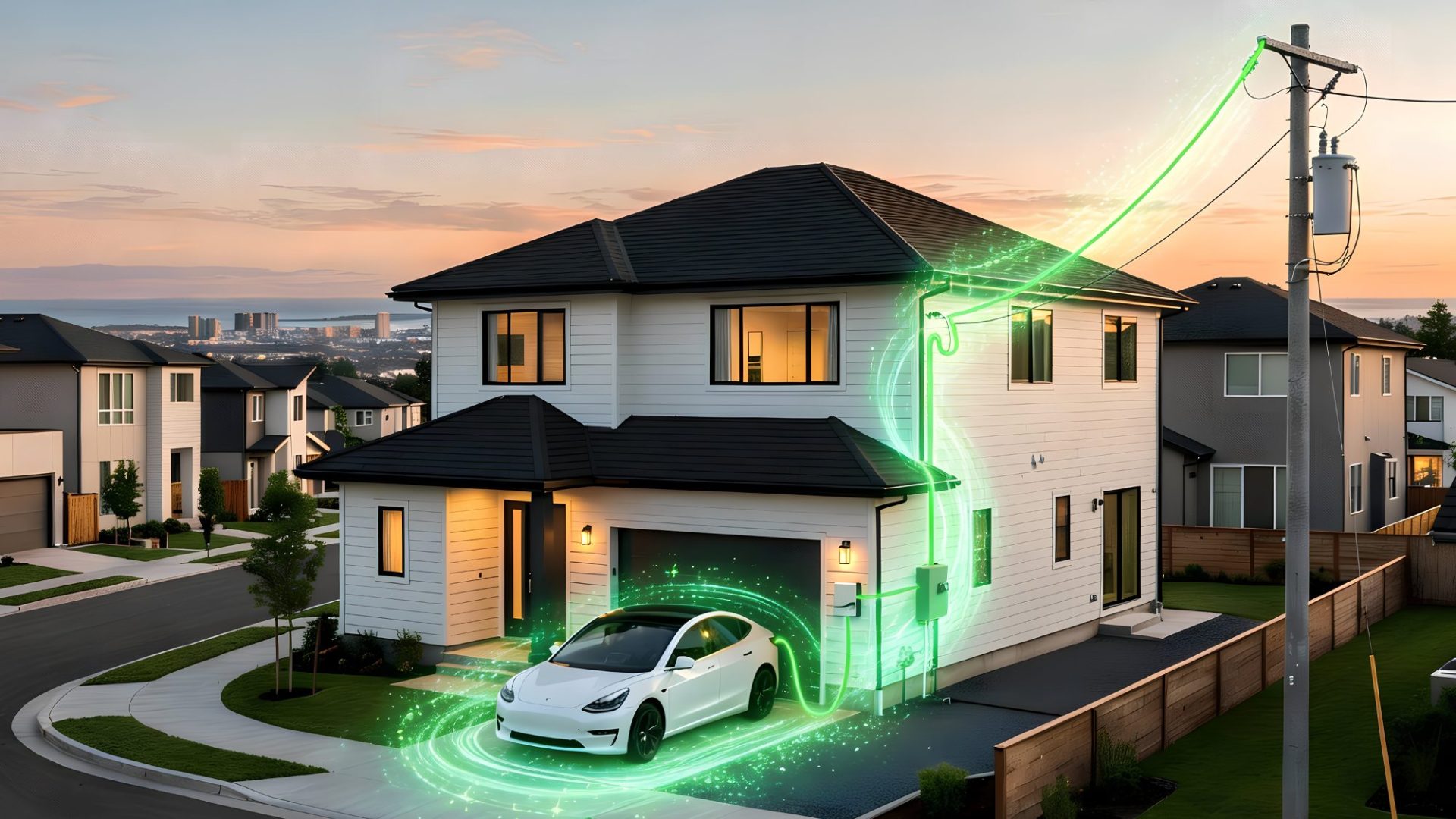
V2G is a bidirectional charging technology that allows electricity to flow in two directions: from the grid to your EV (charging), and from your EV back to the grid (discharging). When you’re enrolled in a V2G program, your utility or grid operator can draw power from your parked EV during times when the grid is under stress, typically hot summer afternoons or cold winter evenings when electricity demand peaks.
In exchange, you receive compensation. The exact payment structure varies by program, but the basic premise is simple: you’re providing a service to the grid, and you get paid for it.
V2G is part of a broader family of technologies often called V2X, which stands for vehicle-to-everything. The “X” can mean different things depending on where the power goes.
| Technology | What It Does | Requires Special Charger? | Requires Utility Program? |
|---|---|---|---|
| V2G (Vehicle-to-Grid) | Exports power to the utility grid | Yes | Yes |
| V2H (Vehicle-to-Home) | Powers your home during outages | Yes | No |
| V2L (Vehicle-to-Load) | Powers devices directly from the car | No | No |
This post focuses on V2G specifically. If you’re interested in using your EV as backup power for your home, check out our guide to V2H (vehicle-to-home) technology. For portable power capabilities, see our post on V2L (vehicle-to-load).
How Does V2G Work?
Standard EV charging is a one-way street. Electricity flows from the grid, through your charger, and into your car’s battery. V2G adds a return path.
When you plug into a bidirectional charger that’s connected to a V2G program, the system can reverse the flow. Your charger’s inverter converts the DC power stored in your EV’s battery back into AC power that’s synchronized with the grid’s frequency. That power then flows through your electrical panel and meter, out to the utility grid.
For this to work, you need three things working together:
-
A V2G-capable electric vehicle with hardware and software designed to support bidirectional power flow
-
A bidirectional charger that can convert power in both directions and communicate with both the vehicle and the grid
-
Enrollment in a utility V2G program that coordinates when your vehicle discharges and how you’re compensated Here’s a critical point that’s often overlooked: the vehicle must explicitly support bidirectional charging. You can’t simply plug any EV into a bidirectional charger and extract power. The vehicle’s battery management system controls what the battery can do, and it must be programmed to allow discharge through the charge port and communicate with the external charger using the right protocols.
The Standards Landscape: Why It Matters
V2G technology is at a transition point between proprietary systems and open standards. Understanding this distinction is important if you’re considering V2G.
Proprietary systems are closed ecosystems where a specific vehicle only works with specific equipment from the same manufacturer. Ford’s F-150 Lightning only works with Ford’s Charge Station Pro and Home Integration System. GM’s Ultium vehicles only work with GM’s PowerShift system. Tesla’s Cybertruck only works with Tesla’s Powershare equipment.
Standards-based systems use open protocols that allow different manufacturers’ vehicles and chargers to work together. The key standard for bidirectional charging is ISO 15118-20, which defines how EVs and chargers communicate to enable two-way power flow. In North America, this standard works over the NACS connector (also known as SAE J3400), which is becoming the universal charging standard.
Why does this matter? Proprietary systems limit your options and tie you to one manufacturer’s ecosystem. Standards-based systems create an open market where you can choose the best charger for your needs, and it will work with any compatible vehicle.
The current reality: As of early 2026, most V2G and V2H implementations in the United States are proprietary. True standards-based bidirectional charging over NACS using ISO 15118-20 is emerging but not yet widely available. This is changing rapidly as automakers roll out ISO 15118-20 support and new bidirectional chargers come to market.
Current V2G Capability: What’s Actually Available
Let’s be specific about what exists today and what’s coming.
Proprietary V2H systems available now (primarily backup power, limited V2G):
| Vehicle | System Required | V2G Capability | Notes |
|---|---|---|---|
| Ford F-150 Lightning | Ford Charge Station Pro + Home Integration System (~$5,200 equipment) | Limited to specific utility pilots | Proprietary DC system; requires Delta inverter equipment |
| GM Ultium vehicles (Silverado EV, Sierra EV, Hummer EV, etc.) | GM PowerShift Charger + V2H Enablement Kit (~$6,800-7,300 equipment) | Limited to specific utility pilots | Same Delta inverter hardware as Ford; proprietary |
| Tesla Cybertruck | Tesla Universal Wall Connector + Powershare Gateway | Not currently available | Proprietary AC system; off-grid V2H only as of now |
| Nissan Leaf (2013+) | Fermata FE-20 (commercial) or compatible CHAdeMO charger | Available in some pilots | Uses CHAdeMO standard (declining in North America) |
Note: Equipment prices shown do not include installation, which varies significantly by location and can add $2,000 to $8,000 or more depending on electrical panel requirements.
These proprietary systems were designed primarily for V2H (home backup), not V2G (grid export). Some have been used in utility V2G pilots, but they aren’t interoperable. You can’t use a Ford system with a GM vehicle, or vice versa.
Standards-based V2G (ISO 15118-20 over NACS) coming in 2026 and beyond:
| Vehicle | Expected Availability | Notes |
|---|---|---|
| BMW iX3 “Neue Klasse” | Spring 2026 | First BMW with announced ISO 15118-20 V2G support |
| Volvo EX90 | 2025+ (V2H standard) | Described as ISO 15118-20-ready |
| Volvo EX30 | Available now | ISO 15118-20-ready; field tested for bidirectional |
| Mercedes-Benz (new GLC electric) | 2026 | Announced bidirectional support |
| GM, Ford, others | 2026-2027 | Transitioning to NACS with expected ISO 15118-20 support |
Note: Some manufacturers have announced ISO 15118-20 hardware support but have not yet enabled bidirectional functionality in production vehicle software. Always verify current capability before purchasing.
The industry is moving toward a future where any ISO 15118-20 compliant vehicle will work with any ISO 15118-20 compliant charger. Many companies are developing bidirectional chargers built on this standard, which will work with compatible vehicles as they become available.
V2G Programs: Where They’re Available
Here’s the reality check: V2G is still in the early stages of deployment. Most programs are pilots with limited enrollment, concentrated in states with aggressive clean energy goals.
States with active V2G programs or pilots:
-
California: The national leader, with programs from PG&E, Southern California Edison, and San Diego Gas & Electric. California has approved millions in V2G pilot funding and is considering mandates that would require all EVs sold in the state to be bidirectional-capable by 2030.
-
Massachusetts: National Grid and Eversource both run connected solutions programs that include V2G components.
-
Connecticut: Participating in multi-state V2G pilots.
-
Maryland: Enacted the first comprehensive V2G interconnection rules in the U.S. (the DRIVE Act), making it easier for residents to connect V2G systems.
-
Texas: Several pilots are underway, driven by grid reliability concerns.
-
New York: Con Edison and other utilities are testing V2G programs.
Most current pilots work with the proprietary Ford, GM, or Nissan systems. As standards-based bidirectional charging becomes available, expect program eligibility to expand significantly.
How V2G Puts Money in Your Pocket
The financial case for V2G comes down to grid services. Utilities and grid operators pay for flexible capacity that can respond quickly when demand spikes.
Here’s how V2G participants get paid:
Demand response programs compensate you for reducing grid strain during peak periods. When the grid is stressed, typically on hot summer afternoons, you allow your EV to discharge. Some programs pay a flat monthly fee for participation, while others pay per kilowatt-hour discharged during demand events. California’s PG&E has paid up to $2 per kWh during emergency load reduction events.
Frequency regulation is a more technical service where your EV helps maintain the grid’s 60 Hz frequency by rapidly absorbing or releasing small amounts of power. This happens automatically and is coordinated by the grid operator.
Time-of-use arbitrage lets you buy electricity when it’s cheap (overnight, when rates might be $0.08 to $0.15 per kWh) and sell it back when prices are high (evening peak hours, when rates can exceed $0.40 per kWh in some markets).
What can you realistically earn?
Earnings vary significantly based on your location, utility program, and how much capacity you’re willing to share. Here are some documented examples from current pilots:
| Program | Location | Reported Annual Earnings |
|---|---|---|
| National Grid Connected Solutions | Massachusetts | Up to $1,500/year or more |
| Eversource Connected Solutions | Massachusetts | ~$3,000/year |
| PG&E Emergency Load Reduction | California | $2/kWh during events |
| University of Delaware V2G Program | Delaware | ~$1,200/year per vehicle |
Most participants in active programs report earnings between $500 and $2,000 per year. That’s a meaningful offset to EV ownership costs, especially when combined with the savings from charging during off-peak hours.
The Future of V2G
V2G is at an inflection point. For years, it’s been a promising concept stuck in pilot programs with proprietary equipment. Over the next two to three years, that’s expected to change.
Standards are maturing. ISO 15118-20, the communication protocol that enables bidirectional charging, is finalized and being implemented. The EU will require all new public chargers to support it by 2027. In North America, the transition to NACS (SAE J3400) as the universal connector creates an opportunity to build bidirectional capability into the charging infrastructure from the start.
Automakers are committing. BMW, Mercedes-Benz, Volvo, and others have announced ISO 15118-20 support for upcoming vehicles. As manufacturers transition their fleets to NACS connectors, most are planning to include bidirectional capability.
New chargers are coming. Companies are developing standards-based bidirectional chargers designed to work with any ISO 15118-20 compliant vehicle. This will break the proprietary lock-in of current systems and give consumers more choice.
Policy is accelerating adoption. California’s SB 233 could require all EVs sold in the state to be bidirectional-capable by model year 2030. The federal government’s Vehicle-Grid Integration Roadmap, released in January 2025, established V2G as a strategic tool for grid stability.
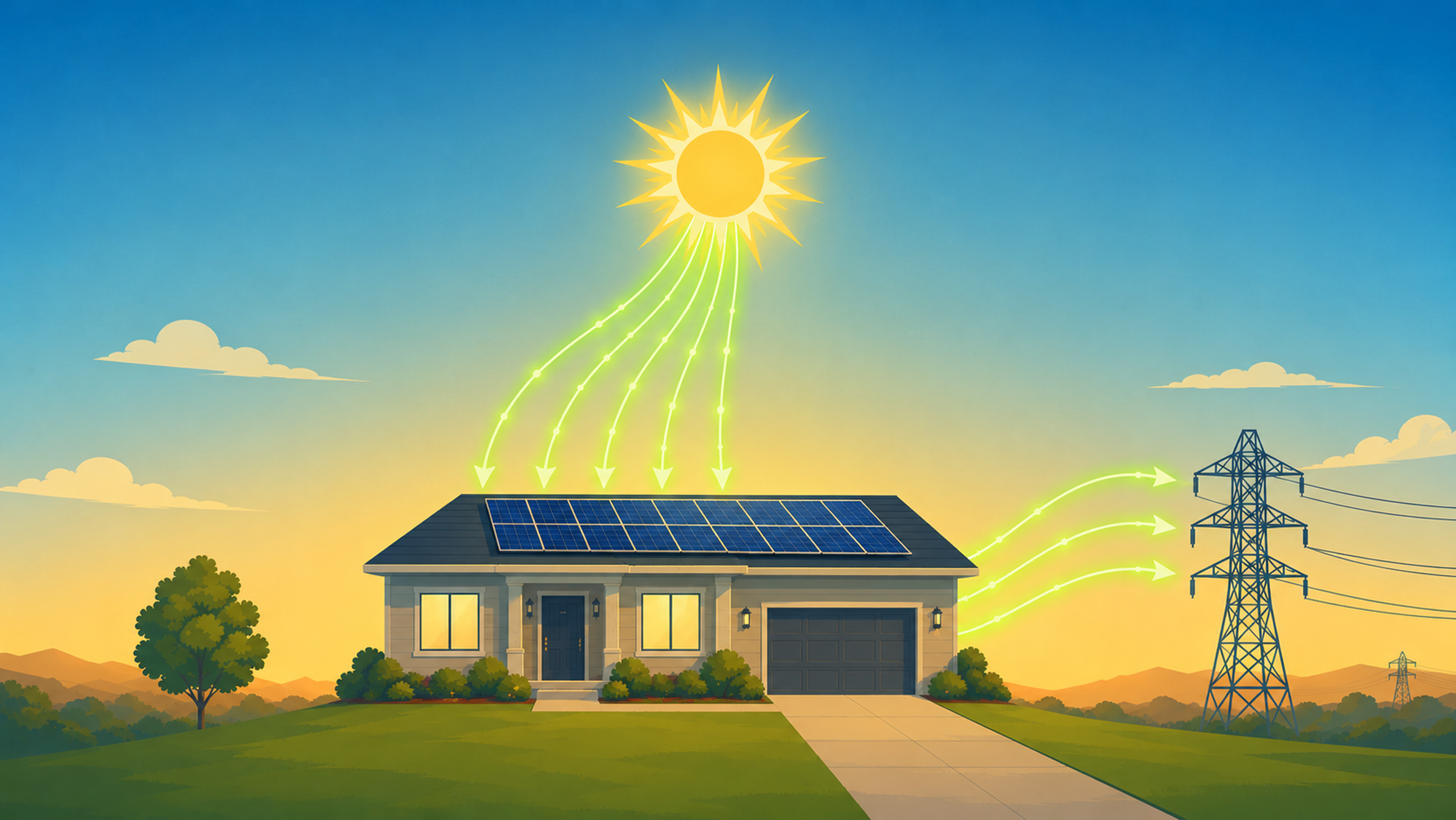
The grid needs it. As EV adoption grows and more renewable energy comes online, grid operators need flexible resources that can absorb excess solar during the day and discharge during evening peaks. The EV batteries already on the road represent enormous untapped potential.
For homeowners considering V2G, the practical advice is this: if you want V2G capability today, you’re limited to proprietary systems from Ford, GM, or Tesla, each requiring their specific equipment and (for V2G) participating utility programs. If you can wait, standards-based systems arriving in 2026 and beyond will offer more flexibility and likely better economics.
If you’re interested in bidirectional charging but V2G isn’t yet available in your area, V2H (vehicle-to-home) may offer immediate benefits. V2H uses the same concept to power your home during outages, and it doesn’t require a utility program. Learn more in our guide to V2H technology.
The Level 2 charger that installs on nearly any panel.
PowerSmart load management eliminates the $3,000-$8,000 panel upgrade most homes need.