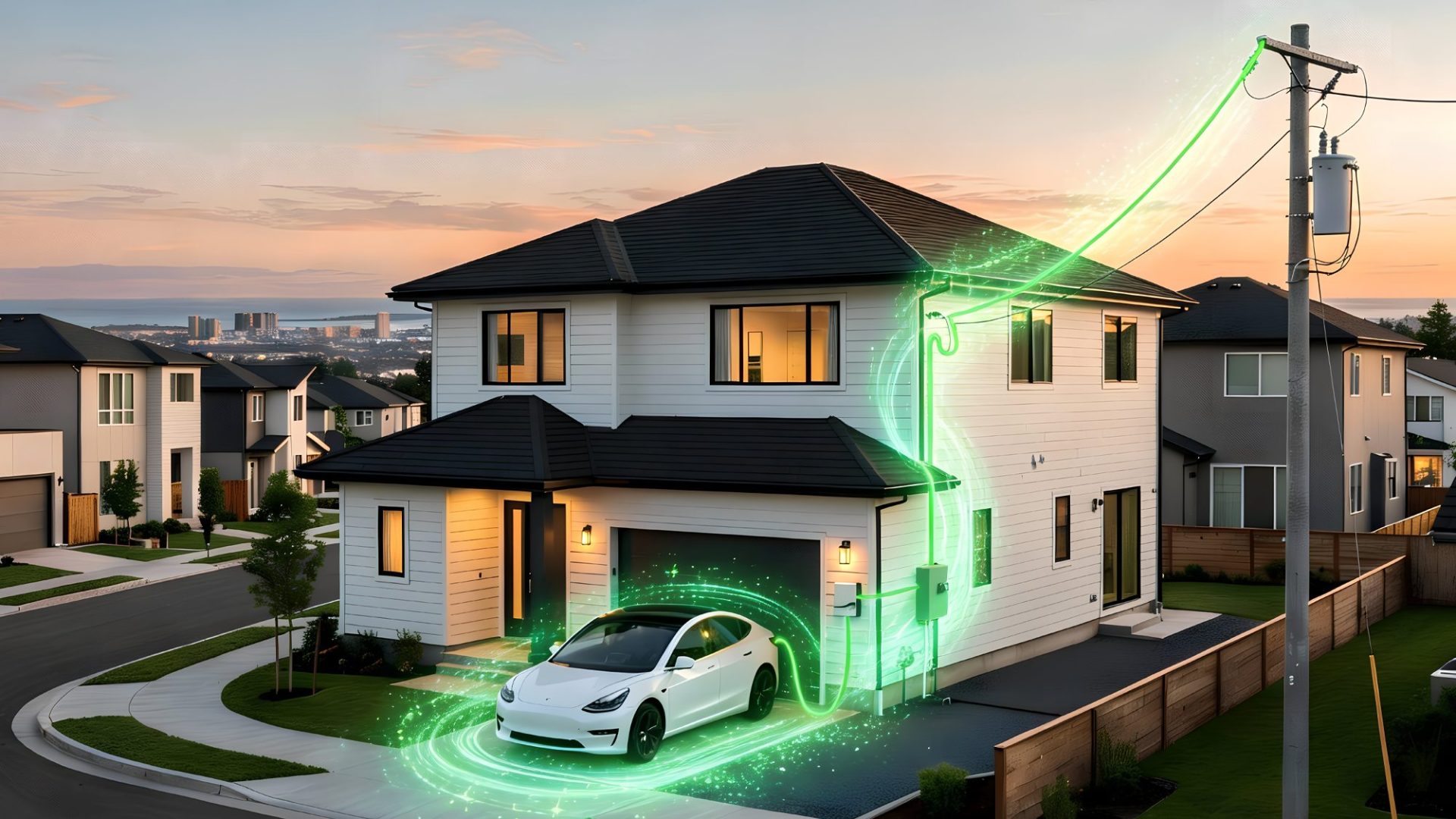
Store the Energy You Generate
During the day, your panels can charge a compatible EV. After sunset, the car covers your home's load without exporting to the grid.
Read the V2H guide
Your EV's battery can do more than power your drive. With a compatible vehicle and system, it can store your solar for the evening and back up selected circuits in an outage. Through eligible utility programs, it can also earn you money for sharing energy with the grid, depending on your utility, state, vehicle and equipment.
Choose a scenario to see how it works.
During the day, your panels can charge a compatible EV. After sunset, the car covers your home's load without exporting to the grid.
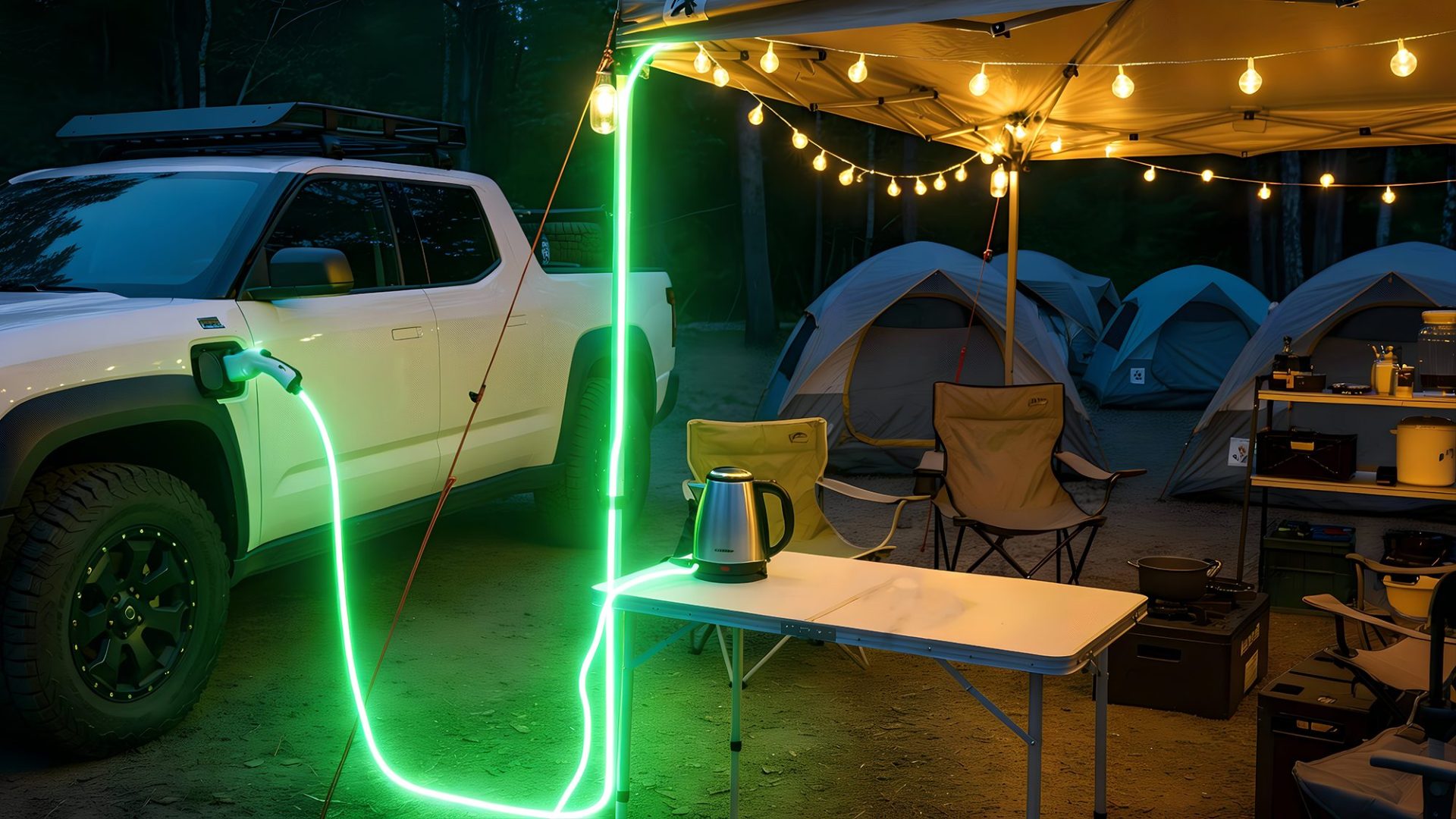
Read the V2H guideWhen utility power is out, your EV can supply selected home circuits, within limits set by battery energy, system output and which circuits are connected.
Read the V2H guideParticipating vehicle-to-grid programs coordinate energy from eligible EVs to help meet grid needs, and some pay you for it. Your utility, state, vehicle and equipment determine whether, and how, you can take part.
Each use has its own requirements, and grid programs vary by utility, state, vehicle and equipment.
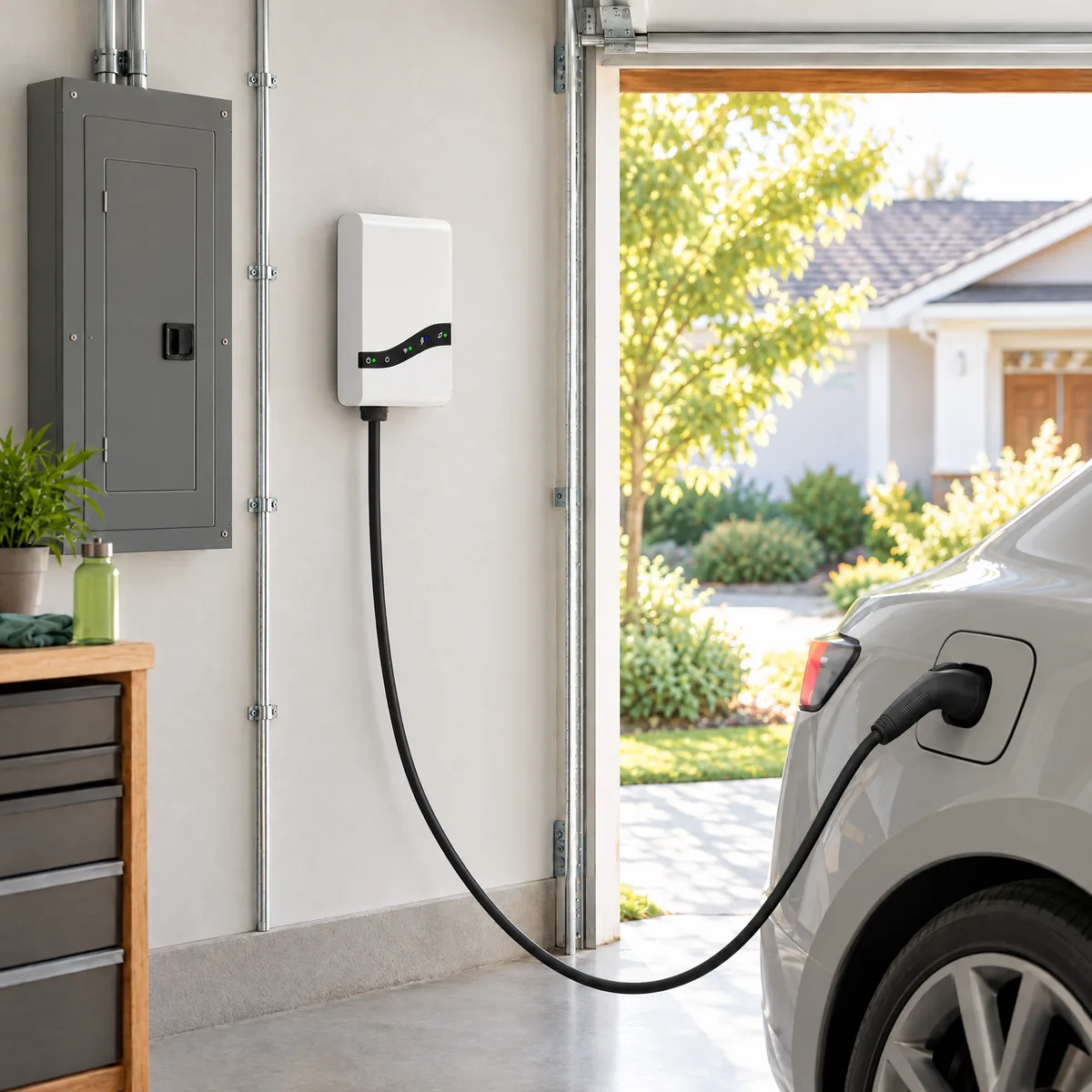
Read the V2G guideEvery bidirectional charger also charges your car, storing electricity in the battery for driving. If you need a charger today, the Emporia Pro Level 2 EV Charger with PowerSmart is available now.
Read the bidirectional charging guide Emporia Pro Level 2 EV Charger with PowerSmart Shop the Pro
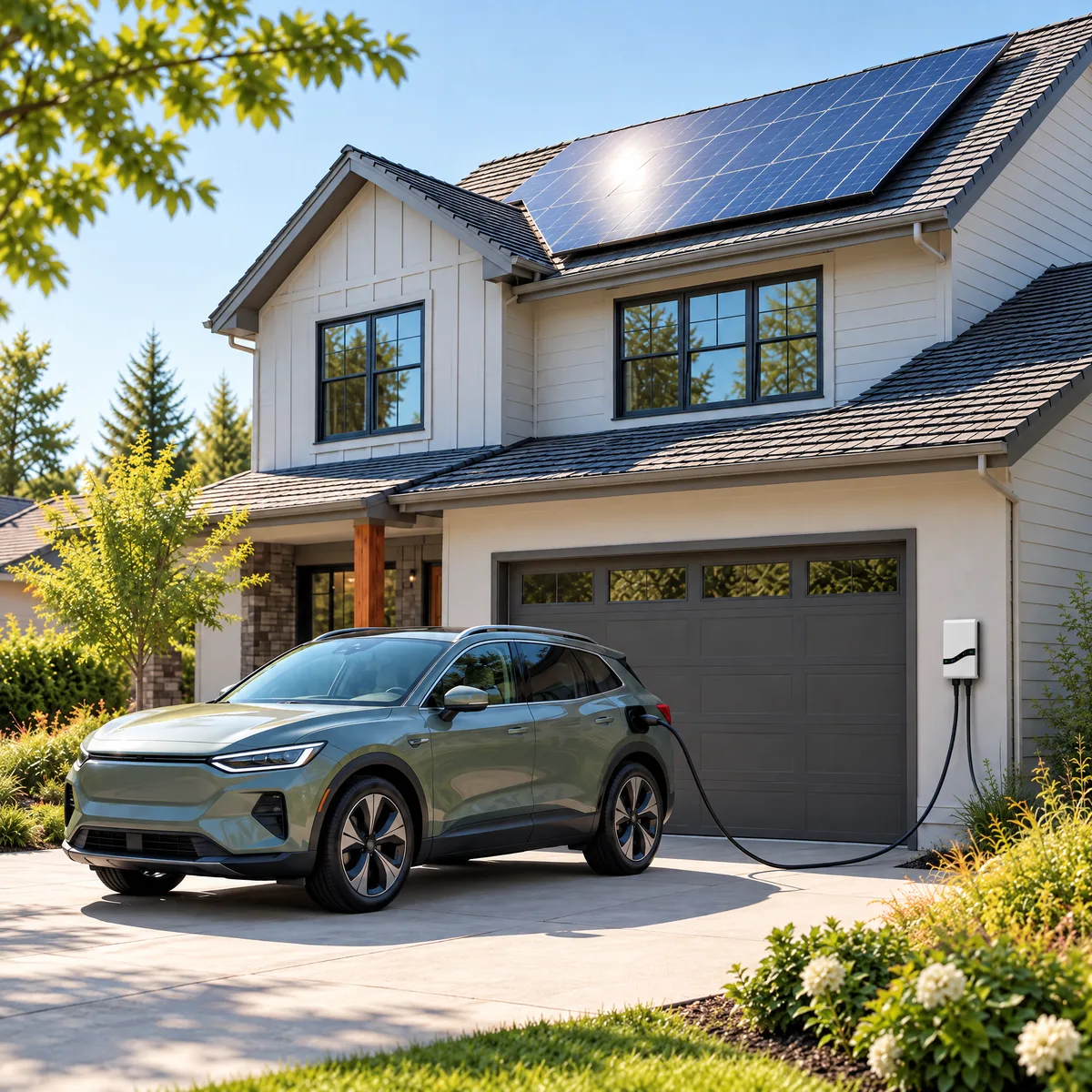
A compatible EV parked at home can soak up the solar your panels make during the day, then run your home through the evening while sending none of that energy back to the grid.
The same setup lets you charge your EV at one time and use that stored energy at home later. The value of that flexibility depends on your driving needs, what your system supports and your electricity rate plan.

With a system designed for outage backup, your EV can supply selected home circuits when utility power is unavailable. What it powers, and for how long, depends on the equipment, available battery energy and household demand. Battery energy, measured in kilowatt-hours, shapes how long backup can last, and system output, measured in kilowatts, sets how much can run at once. Your starting charge and the energy you keep for driving change the result too.
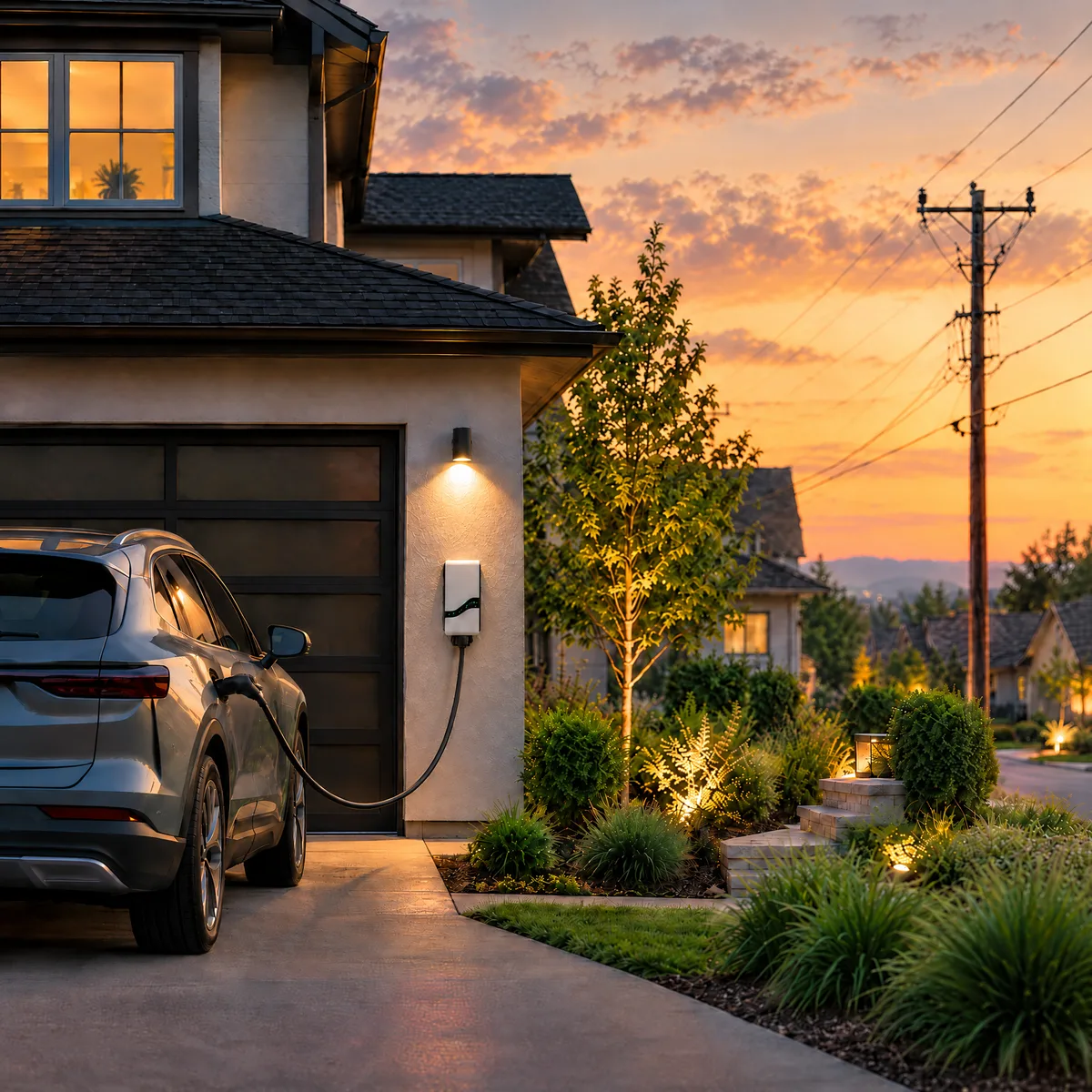
Participating vehicle-to-grid programs coordinate energy from eligible EVs to help meet grid needs. Through eligible utility programs, sharing that energy can pay you. Your utility, state, vehicle and equipment determine whether, and how, you can take part.
Examples running today: PG&E's V2X program in California offers upfront and performance incentives, with enrollment open through June 30, 2027. Tesla's Powershare Grid Support pays Cybertruck owners in Texas and parts of California for energy shared during grid events. In Massachusetts, Eversource and National Grid are opening their ConnectedSolutions demand response program to bidirectional EVs. Each program sets its own eligibility, amounts and rules, and the details above are as each operator published them in October 2026.
The key difference is where battery power becomes electricity your home can use. An EV battery supplies direct current, or DC. Homes use alternating current, or AC. Bidirectional systems handle that conversion either inside or outside the vehicle.
| AC bidirectional charger | DC bidirectional charger | |
|---|---|---|
| How it works | The vehicle converts battery power to AC before sending it out. The vehicle must support that function, and the connected equipment must support the intended home or grid use. | The vehicle sends DC power to external equipment, where it is converted to AC. This requires a vehicle that supports DC export and equipment designed to work with it. |
| What it costs, and why | The vehicle does the converting, so the wall equipment stays simpler. Tesla's Powershare home backup hardware lists at $1,970. | The inverter lives in the wall equipment, which raises the price. GM's vehicle-to-home bundle lists at $8,998 and Wallbox's Quasar 2 at $6,489, all before installation. |
| Which vehicles | A small set today: Tesla's Cybertruck, plus Model 3 and Model Y ordered October 1, 2026 or later, which Tesla says are Powershare-capable. Ford says its 2027 Fathom will convert inside the vehicle too. | Most systems shipping today: the Ford F-150 Lightning (2022 to 2025), GM's Ultium EVs, the Kia EV9 with the Wallbox Quasar 2, the Nissan Leaf over CHAdeMO, and the Volvo EX90 and Polestar 3 with the dcbel Ara. |
| When | Available now from Tesla. Ford says the Fathom arrives in 2027; that date is Ford's, not a promise of what is for sale today. | Available now for the pairings above. Kia says the EV6 and the 2026 EV9 follow in late 2026, and GM lists the 2027 Bolt as eligible. |
List prices are each maker's published price as of October 2026, before installation. Some systems, like Sunrun's Home Integration System and the dcbel Ara, are quoted per installation instead.
That design choice affects which vehicles and equipment can work together. Compatibility also depends on communication, home integration and support for the use you intend.
Some vehicle and equipment combinations are available today, but support varies by model, system, function and location.
Pairings available today include the Ford F-150 Lightning (2022 to 2025) with Ford's and Sunrun's home equipment, GM's Ultium EVs with the GM Energy bundle, the Kia EV9 with the Wallbox Quasar 2, the Nissan Leaf over CHAdeMO, the Volvo EX90 and Polestar 3 with the dcbel Ara, and Tesla's Cybertruck through Powershare.
PG&E, whose California program covers most of these pairings, calls the Cybertruck the first AC vehicle-to-grid setup approved for its customers.
A car that can power devices may not support home backup, and a home backup system may not qualify for grid export.
What lags is adoption: most vehicles on the road still charge one way, certification for systems that convert inside the vehicle is still being developed, and interconnection rules written for solar panels are only now being adapted for vehicles.
Confirm the complete vehicle and equipment combination, the functions it supports, and any software or local requirements with the vehicle maker and equipment provider.
Emporia began with circuit-level visibility and has grown into a home energy management platform that connects energy monitoring, EV charging, batteries, automation and utility programs, now in more than 400,000 homes. Emporia is developing a bidirectional charger and coming to market with a product.
Understand the use case, then explore what it requires.
Learn how vehicle-to-home charging works and what a home backup setup may require.
January 29, 2026
Explore vehicle-to-grid charging, program participation, and why local eligibility matters.
January 29, 2026
See how vehicle-to-load charging lets a compatible EV power devices and appliances directly.
January 29, 2026
Get the broader terminology and context behind two-way EV charging.
July 28, 2025
If you need hardware today, you can buy these now.
See your solar and your home's energy use.
Emporia Vue 3 Home Energy Monitor →Store energy and back up your home during outages.
Emporia Home Battery System →Charge faster at home, and schedule and track every session in the app.
Emporia Pro Level 2 EV Charger with PowerSmart →