Key Takeaways
- Most Americans spend about $600-$1,200 per year charging an EV at home, compared with $1,500-$2,500 per year for gasoline.
- Annual charging cost equals annual miles divided by vehicle efficiency, multiplied by the electricity rate.
- Driving 15,000 miles in an EV rated at 3.5 miles per kWh with electricity at $0.15 per kWh costs about $643 per year.
- Time-of-use electricity can cost 50-70% less during off-peak hours, allowing smart scheduling to cut charging expenses substantially.
- A Level 2 charger typically costs $300-$1,000, with professional installation adding about $500-$2,000.
If you drive 12,000 miles per year, you might spend $1,800 on gas, but the same driving in an EV could cost just $600 in electricity. That’s not just a nice talking point; it’s based on real utility data and Department of Energy statistics that show home charging consistently beats gas station fill-ups on cost.
This post will break down the real costs of home charging, help you calculate your own expenses, and show you exactly how EV fueling compares to gasoline. By the end, you’ll have the tools to see your potential savings and make an informed decision about making the switch.
The Quick Answer
Most Americans pay $600-$1,200 per year to charge an EV at home, compared to $1,500-$2,500 for gasoline.
What Determines Your Charging Costs?
Understanding your home charging costs comes down to a few key factors. Get these right, and you can predict your expenses with surprising accuracy.
Your Electricity Rate Is Everything
Your electricity rate is the single biggest factor in your charging costs. The national average sits around 17 to 18 cents per kilowatt-hour (kWh), but rates vary dramatically by state.
Check your utility bill to find your exact rate. It’s usually listed as “Energy Charge” or “kWh Rate.” This number will be the foundation of all your calculations.
Time-of-Use Rates: Your Secret Weapon
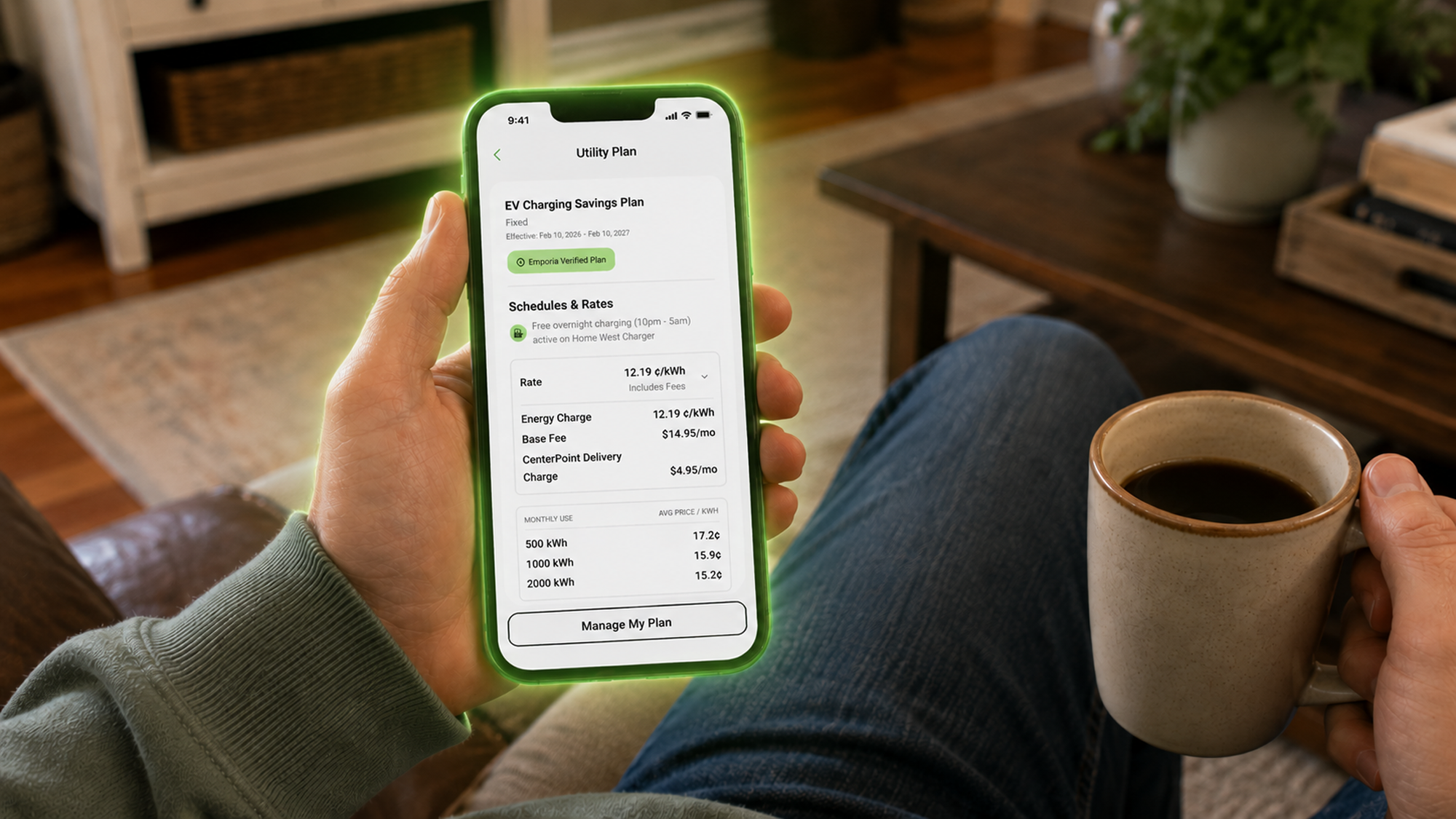
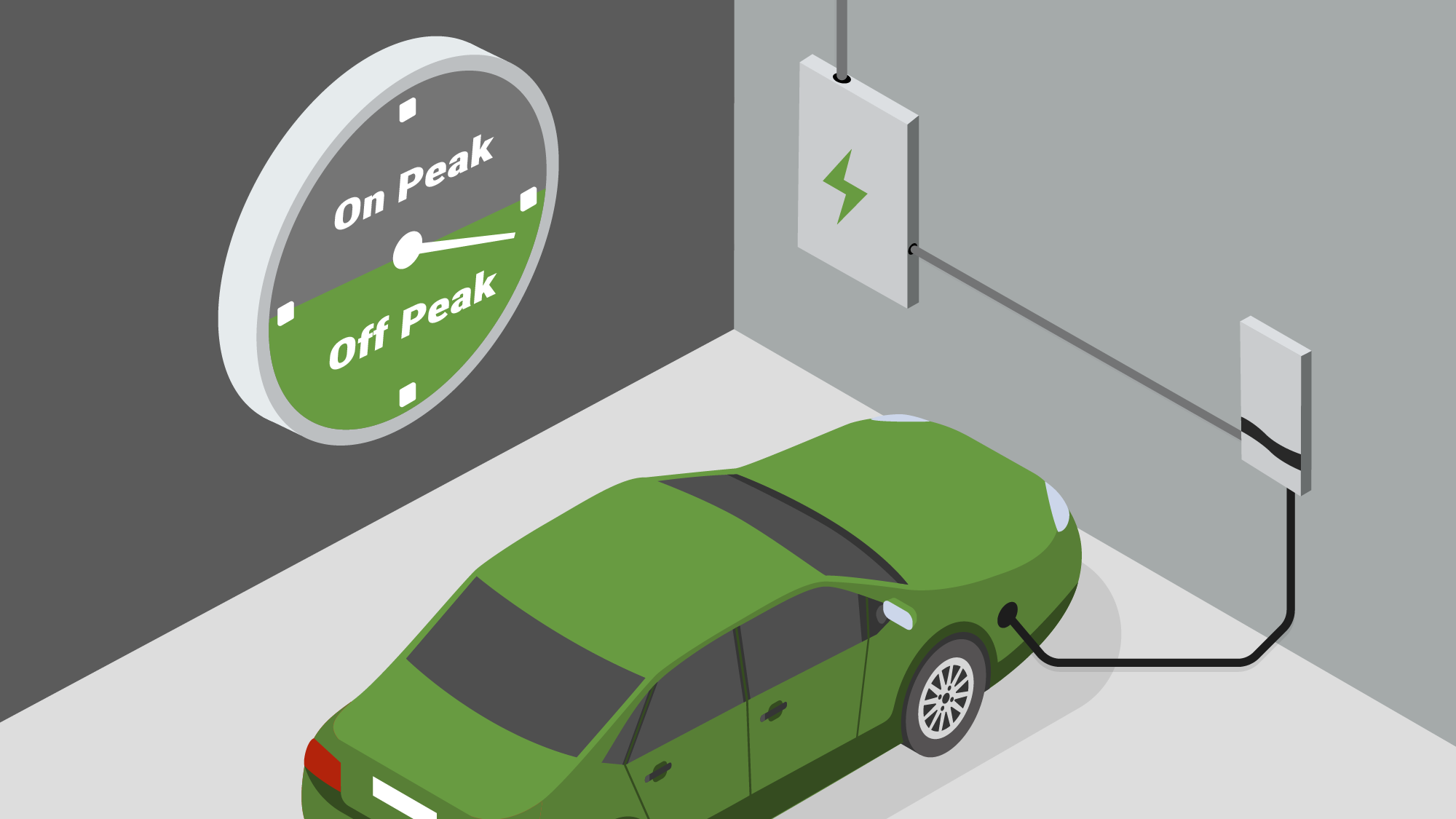
Here’s where smart EV owners really save money. Many utilities offer time-of-use (TOU) rates that charge different amounts depending on when you use electricity. During off-peak hours (typically late at night and early morning), electricity can cost 50-70% less than peak hours.
For example, if your peak rate is 20 cents/kWh, your off-peak rate might be just 8 cents/kWh. Since most people charge overnight anyway, this can cut your charging costs in half without changing your routine.
Smart Charging Makes the Difference
Smart chargers take advantage of TOU rates automatically, scheduling your charging for the cheapest hours. They can also manage your home’s total energy load, ensuring you never exceed your electrical panel’s capacity while still getting the fastest possible charge.
Vehicle Efficiency: The EV Version of MPG
Just like gas cars have different fuel economy ratings, EVs have different efficiency ratings measured in miles per kWh (mi/kWh). A typical compact EV gets about 4 mi/kWh, while a large SUV might get 2.5 mi/kWh.
More efficient vehicles cost less to charge, just like fuel-efficient gas cars cost less to fill up. The good news? Even the least efficient EV is still cheaper to “fuel” than most gas cars.
Your Driving Habits Matter (But Less Than You Think)
Obviously, driving more miles means using more electricity. But here’s the thing: even heavy drivers save money with EVs. The cost per mile is so much lower that you’re still ahead, even if your monthly charging bill looks substantial.
Weather Affects Your Costs Slightly
Cold weather can reduce EV efficiency by 10-20%, meaning you’ll use a bit more electricity in winter months. It’s worth factoring in, but it rarely changes the overall value proposition significantly.
The Simple Math: Calculate Your Costs
Let’s dive into some math. Here’s the basic formula for calculating a yearly charging cost:
(Annual Miles Driven ÷ Vehicle Efficiency) × Electricity Rate = Annual Charging Cost
For example, if you drive 15,000 miles per year in an EV that gets 3.5 mi/kWh, and your electricity costs 15 cents/kWh:
(15,000 ÷ 3.5) × $0.15 = $643 per year
That same 15,000 miles in a gas car getting 25 MPG, with gas at $3.50 per gallon, would cost $2,100 per year. This basic calculation gives you a solid starting point, but for more precise numbers based on your specific situation, use our calculator below to run different scenarios:
Use our calculator above to estimate your specific savings potential based on your location, driving habits, and local utility rates. The results might surprise you, and most EV owners can save $300-$800 annually just by changing when they charge.
The beauty of these savings is that they compound over time. That $400 annual savings becomes $2,000 over five years, and $4,000 over ten years.
Hidden Costs and Savings to Consider
Just like with gas cars, fuel costs aren’t the only factor. If you’re thinking about the cost to charge an EV in the scope of full ownership, there are a few other pieces to the puzzle:
Installation Costs
While home charging saves money long-term, there is an upfront investment for Level 2 charging equipment and installation (more on this below).
Maintenance Savings Add Up
EVs have significantly lower maintenance costs than gas vehicles: no oil changes, fewer moving parts, less frequent brake replacement. This typically saves $400-$600 annually.
Incentives Can Offset Costs
State tax credits for EV purchases can bring down vehicle costs, plus many utilities offer rebates for home charging equipment installation. These can substantially reduce your initial investment.
EV Home Charging vs. Gasoline: The Real Comparison
The numbers don’t lie: charging an EV at home consistently costs less than buying gasoline. Based on national averages, EV drivers can save $800 to $1,000 per year on fuel costs alone.
Even in high-electricity-cost states like California, home charging typically beats gasoline (especially once you consider TOU rates). And in low-cost electricity states, the savings are dramatic, sometimes 70% or more.
Installation Costs and Charger Options: What You Need to Know
Let’s address the elephant in the room. A Level 2 home charger typically costs $300-$1,000 for the unit itself, plus $500-$2,000 for professional installation, depending on your home’s electrical setup and how far the charger is from your electrical panel. However, the biggest potential expense isn’t the charger or basic installation. It’s the electrical panel upgrade that more than 50% of homes need to safely handle the power demands of EV charging.
Especially if you live in an older home, EV charger installations often require upgrading your home’s electrical service from 100 to 200 amps, which can cost $3,000-$5,000 or more. This is where smart technology makes a dramatic difference. Systems like Emporia’s PowerSmart technology (included with the Emporia Pro charger) use advanced load management to solve this expensive problem. PowerSmart monitors your home’s total energy usage in real-time and automatically adjusts your EV charger’s power draw to stay within your existing panel’s capacity. This means most homeowners can install a Level 2 charger without any panel upgrades, potentially saving thousands of dollars.
The Level 1 “Workaround” (And Why We Don’t Recommend It)
Some people consider sticking with Level 1 charging (plugging into a standard 120V household outlet) to avoid installation costs entirely. While this technically works, it comes with significant limitations that make it impractical for most drivers.
Level 1 charging is slow, adding only 3-5 miles of range per hour of charging. This means it’s only really viable if you drive less than 40 miles daily and can religiously charge every single night without fail. The slow charging speed also limits your flexibility. You can’t effectively take advantage of time-of-use rates since you need to charge whenever possible, not when electricity is cheapest. Level 1 charging is also less energy efficient than level 2 charging - a study done by the (Institute of Electrical and Electronics Engineers) IEEE found that on average, Level 2 charging was 5.6% more efficient than Level 1 charging. Additionally, Level 1 chargers rarely come with smart features to automatically schedule charging during low-cost periods.
Perhaps most importantly, Level 1 charging creates range anxiety. One missed charging session or an unexpectedly long day of driving can leave you stranded. Most EV owners who try to make Level 1 work find it so limiting that they upgrade to Level 2 within months anyway.
Why Level 2 Is Worth the Investment
Level 2 charging transforms the EV ownership experience by adding 25-40 miles of range per hour, allowing you to fully charge overnight even after your longest days. The speed difference alone justifies the investment, but the smart features available with modern Level 2 chargers deliver the real value.
Smart charging capabilities include scheduling for off-peak rates, which can cut your charging costs in half automatically. Advanced systems also provide load management to prevent electrical overloads and energy monitoring to track your actual savings over time. These features essentially pay for themselves through optimized charging schedules and lower electricity costs.
Level 2 charging also future-proofs your home for any EV you might buy later, including larger vehicles with bigger batteries that would make Level 1 charging completely impractical. Professional EV charging installation can even increase your property value, making it an investment in your home as well as your transportation.
When you factor in technologies like PowerSmart that eliminate costly panel upgrades, the installation cost typically pays for itself within 1-2 years through optimized charging schedules, avoided upgrade costs, and pure convenience. The ability to charge any EV quickly and efficiently while taking advantage of the lowest electricity rates makes Level 2 charging not just worth the investment, but essential for maximizing your EV savings.
Your EV Charging Costs: Affordable and Controllable
Here’s what we’ve learned: home charging is not only affordable, it’s also predictable and controllable. Your costs are driven by your electricity rate, your car’s efficiency, and your driving habits (all factors you can plan around).
The math consistently favors EVs over gasoline, often by substantial margins. Even accounting for installation costs, most drivers break even within two years and save money every year after that.
Use the calculator above to see your specific potential savings, then honestly assess whether your current electrical setup can handle your charging needs. Once you know your potential savings, the next question becomes choosing the right charger and installation approach for your home.
Ready to Start Saving? Consider the Emporia EV Charger
If you’re ready to make the switch and maximize your savings, the Emporia’s EV chargers deliver everything you need at an exceptional value. They automatically schedule charging during the cheapest off-peak hours, and when paired with our Vue Home Energy Monitor, unlocks advanced features like peak demand management and excess solar charging. With PowerSmart technology, you can even install it without costly electrical panel upgrades, potentially saving thousands on installation.
The transition to electric driving isn’t just about being environmentally conscious (though that’s a great bonus). It’s about taking control of your transportation costs and saying goodbye to the gas pump forever.
Award-Winning Performance You Can Trust.
Named best EV charger by Motortrend, InsideEVs, Good Housekeeping, and more. Smart scheduling built in.