For over two decades, I specialized in North American energy markets. I watched power flow across transmission lines, tracked commodity prices, and saw firsthand how the grid balanced supply and demand. It was a system that worked. Until it didn’t.
The “electrify everything” movement everyone’s talking about has a multi-trillion-dollar problem nobody wants to discuss. We’re asking for a century-old grid, built for a fundamentally different world, to handle an explosion of new demand from electric vehicles, heat pumps, and electrified homes. The traditional response? Spend trillions rebuilding infrastructure from the ground up.
Here’s what I learned in those years trading energy: the smartest solution isn’t always the biggest one. Sometimes the answer isn’t building more. It’s using what we already have, smarter. That insight led me to found Emporia Energy in 2018, and it’s why I believe we’re about to waste trillions on infrastructure upgrades we don’t actually need.
The Challenge: A 20th-Century Grid Facing 21st-Century Demand
For 100 years, our electrical grid operated on a beautifully simple premise: massive, centralized power plants pushed electricity through transmission lines to homes and businesses. The grid’s only job was balancing. Ramp supply up or down to meet whatever demand came its way. One direction. One solution.
This model is breaking down, and the numbers tell the story.
Consider what’s happening at the home level. A house built in 1970 typically had 100-amp electrical service. That was enough for a few lights, maybe an air conditioner, basic appliances. By 1990, new construction standards called for 200-amp service to handle more electronics and larger HVAC systems. Today? With EVs that need level 2 chargers, heat pumps replacing gas furnaces, and induction stoves replacing gas ranges, many homes need 300+ amps of capacity.
The cost to upgrade? Homeowners face $1,300 to $3,000 to go from 100 to 200 amps. Jumping to 400 amps? That’s $8,000 to $12,000 or more, according to HomeGuide and This Old House. And that’s just one house.
Scale that problem to a neighborhood, and you’re looking at distribution transformer upgrades and new lines. Scale it to a city, and you need substation expansions. Scale it nationally, and the numbers become staggering.
The “Brute Force” Solution Nobody Can Afford
The University of Texas at Austin’s Energy Institute published a sobering analysis almost a decade ago: replacing our current electrical grid would cost nearly $5 trillion. That’s not building new capacity. That’s just replacing what we have today with modern equivalents, and without even accounting for more recent developments like the need (quickly) for exponential growth in data centers.
But we need more than replacement. The American Society of Civil Engineers gave our energy infrastructure a D+ grade. Most of our transmission lines are over 25 years old, approaching the end of their typical lifecycle. To modernize the grid AND accommodate the energy transition, we’re looking at an even bigger bill.
The challenge goes beyond generation. According to a 2021 American Action Forum analysis, adapting distribution systems to handle EV charging and rooftop solar adoption alone could cost nearly $1 trillion. That’s just the distribution system. The “last mile” that brings power to your home.
This isn’t just expensive - it’s a bottleneck that threatens the entire energy transition. Even if we had unlimited funds, we face massive constraints: permitting processes that take years, a shortage of skilled electrical workers, and supply chain limitations for specialized equipment. The traditional infrastructure buildout approach doesn’t just cost too much. It takes too long.
Someone has to pay for all this, and that someone is homeowners and ratepayers. These costs don’t disappear. They show up in monthly electric bills and property tax assessments for decades to come.
The Solution: The Smart, Two-Way “Grid of the Future”
Here’s where my years in energy markets gave me a different perspective. When traders see a supply-demand imbalance, we don’t just look at increasing supply. We look at both sides of the equation. What if, instead of spending trillions on new copper and concrete, we could balance the grid from both directions? Managing not just supply, but demand?
This is the “Grid of the Future,” and it’s not theoretical. It’s being built right now, in homes and driveways across America, through Home Energy Management Systems powered by distributed battery capacity.
The key insight: Americans are already buying the solution. They’re installing solar panels, purchasing electric vehicles, and adding home batteries. According to the Department of Energy, there are currently 30-60 gigawatts of virtual power plant capacity already operating in the United States. That’s meaningful grid capacity that already exists, sitting in people’s garages and basements.
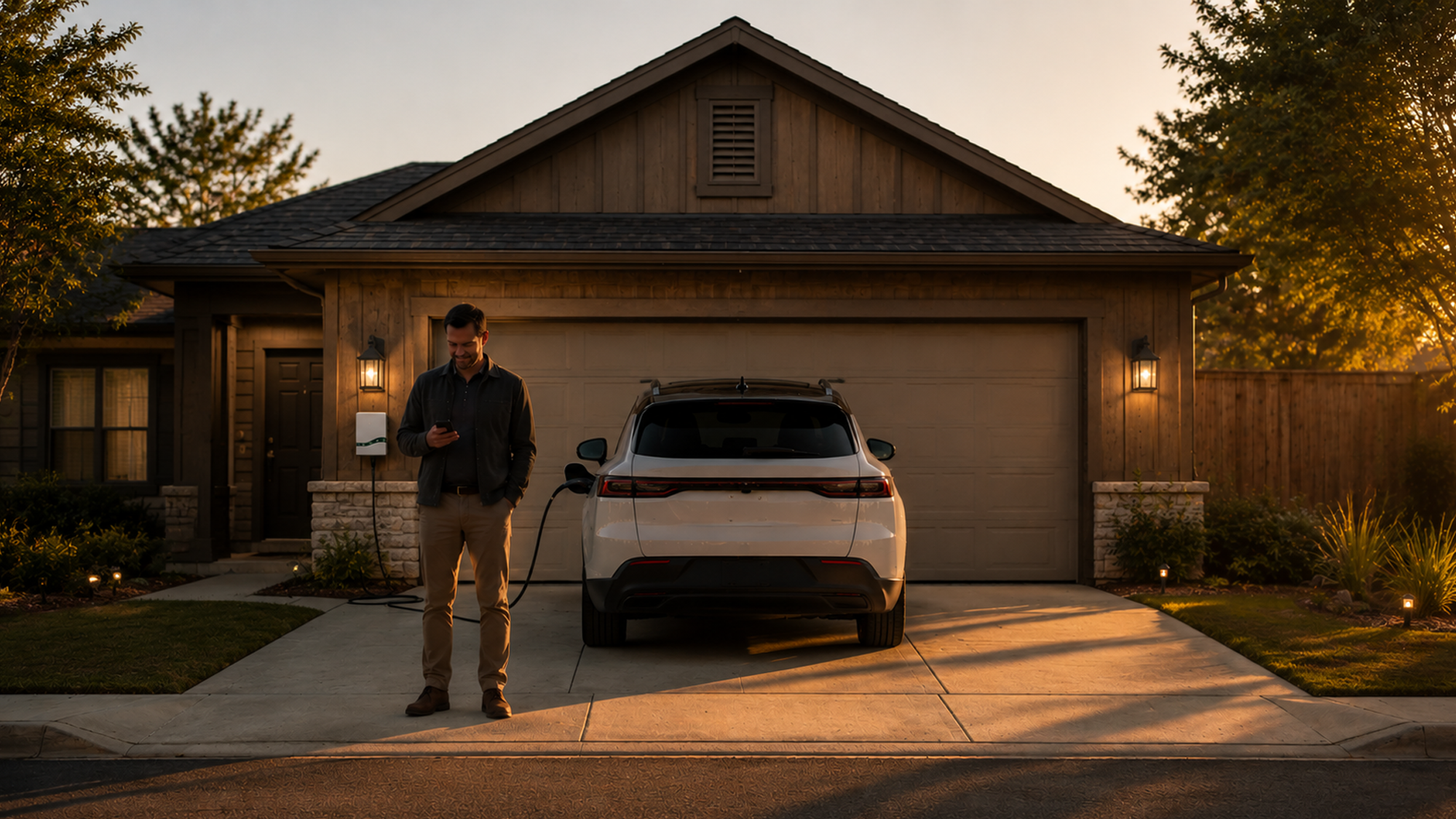
Your electric vehicle provides a perfect example. That car sits parked 95% of the time with 75-125 kilowatt-hours of battery capacity. That’s enough to power an average home for 2-4 days. Right now, that asset just sits there. But with the right technology, it becomes part of the solution.
How Distributed Energy Actually Works
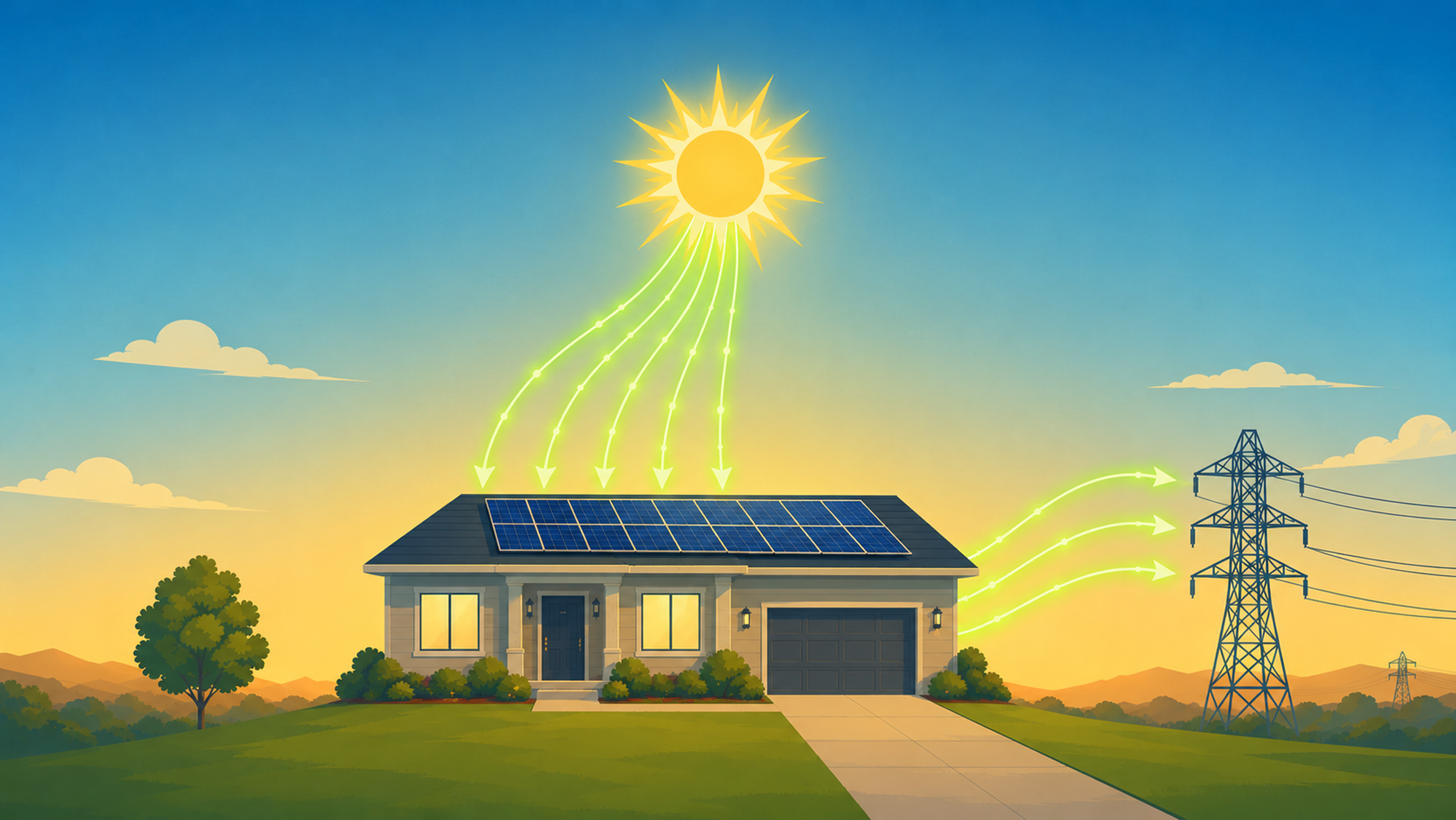
The concept is straightforward: store energy when it’s cheap, abundant, and clean (like mid-day when solar production peaks) and use that stored energy during expensive peak demand hours when the grid is stressed.
A bidirectional EV charger or home battery system, connected to a smart energy management platform, can do this automatically. During the day when solar is plentiful and electricity prices are low, batteries charge up. Then, during the 4pm-9pm peak period when utilities fire up expensive gas “peaker” plants and rates skyrocket, those batteries discharge. They power your home and reduce stress on the grid.
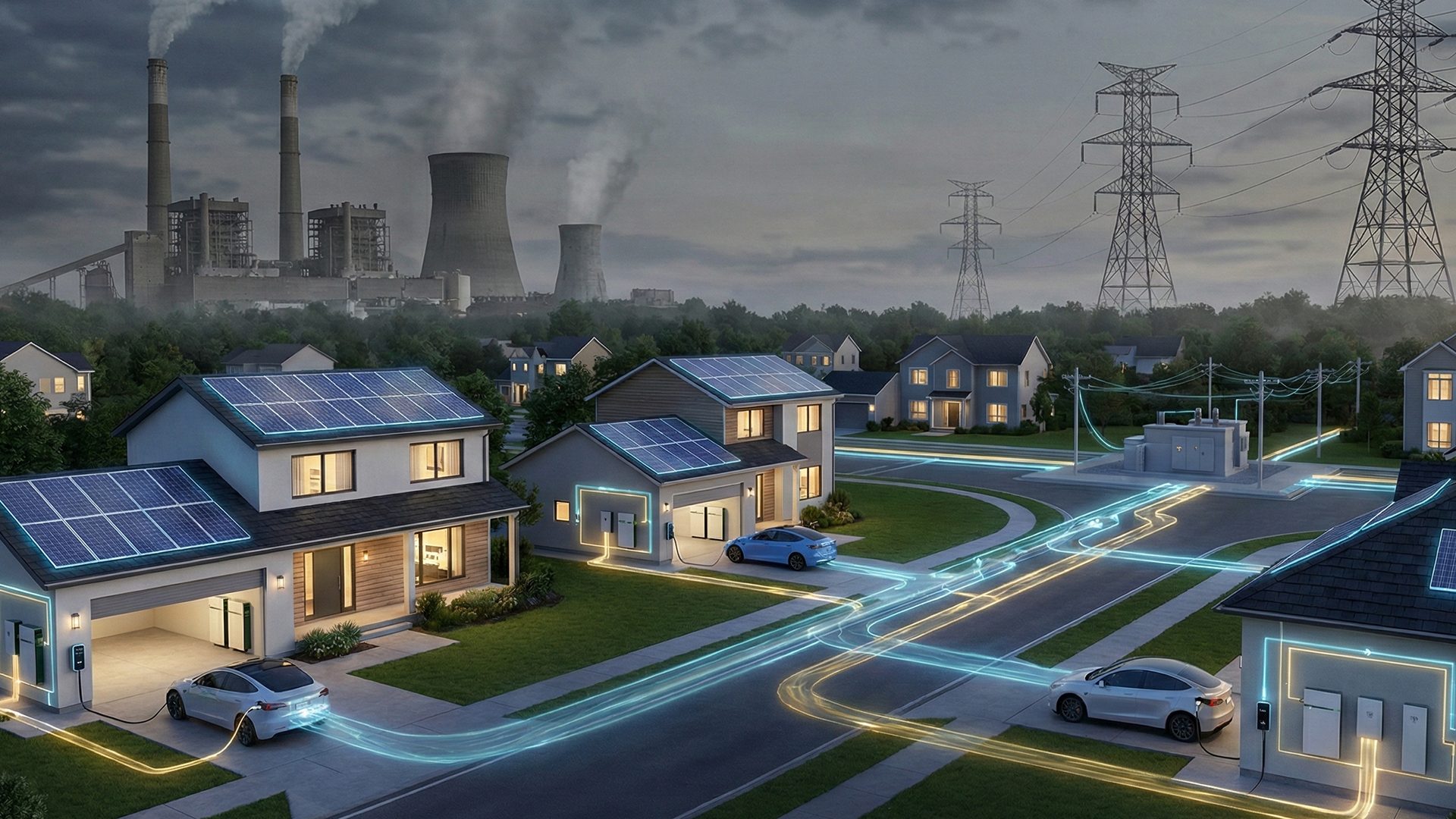
This isn’t just individual homeowners being smarter about their energy use. When thousands of these systems work together through what’s called a Virtual Power Plant (VPP), they behave like a traditional power plant from the grid’s perspective. But one that’s distributed, resilient, and already paid for by the homeowners.
The DOE has set an ambitious but achievable target: grow VPP capacity to 80-160 gigawatts by 2030. That’s equivalent to avoiding the construction of 80-160 new fossil fuel power plants. During the June 2025 heat wave in New England, 5 gigawatts of VPP capacity helped avoid blackouts when the grid was pushed to its limits.
Here’s what makes this economically compelling: VPPs aren’t just cheaper to build than traditional power plants. They create direct value for participants. According to a comprehensive 2024 study by The Brattle Group, households participating in all residential VPP options could receive $500-$1,000 annually in compensation. California alone could see $550 million in annual consumer benefits, with $500 million of that flowing directly to participating homeowners and businesses.
The “Huge Value” of Cost Avoidance
When I talk to people about distributed energy, they often focus on what gets built: the solar panels, the batteries, the smart chargers. But the real value proposition isn’t what we’re building. It’s what we’re avoiding.
In the utility industry, this concept is called “Non-Wires Alternatives” or NWAs. The idea: use distributed energy resources to defer or eliminate traditional infrastructure upgrades. And the economics are compelling.
Four Levels of Infrastructure We Don’t Have to Build
1. Home Service Upgrades Avoided
Remember those $8,000-$12,000 electrical panel upgrades many homeowners face to support EV chargers? Smart energy management eliminates that cost entirely.
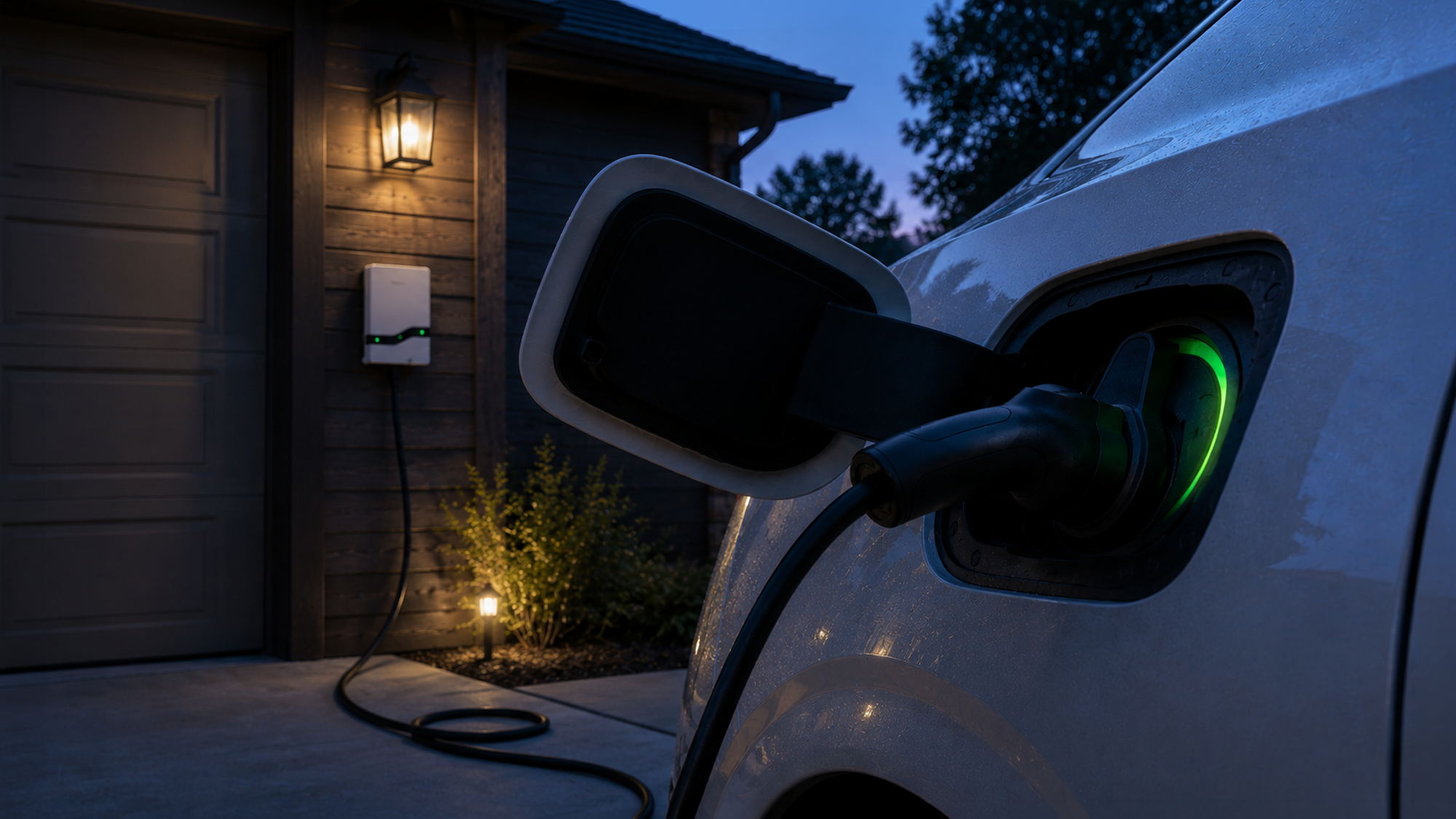
At Emporia, we developed PowerSmart technology that monitors your home’s real-time energy use and intelligently allocates available capacity. Instead of upgrading from 200 to 400 amps, you manage 300+ amps of appliances within your existing 200-amp service. The system ensures you never exceed your panel’s capacity while still charging your EV up to 9 times faster than a standard outlet. That’s thousands saved per household.
2. Distribution System Upgrades Delayed or Eliminated
When individual homes manage their load, the benefits multiply at the neighborhood level. Those local distribution transformers that were heading toward overload? Suddenly they have headroom again.
The most famous example is Con Edison’s Brooklyn-Queens Demand Management program. Facing a $1 billion substation upgrade, they instead invested $200 million in distributed resources: energy efficiency, demand response, and solar-plus-storage. The program worked. The substation upgrade was deferred indefinitely, saving $800 million while actually improving reliability for customers.
According to T&D World, successful NWA programs across the country are deferring infrastructure investments while enhancing grid performance. These aren’t pilot projects. They’re operational programs proving the model works at scale.
3. Transmission System Capacity Preserved
Managing demand at the edge of the grid reduces stress on high-voltage transmission lines. Less peak load congestion means existing transmission infrastructure can serve more customers without expensive upgrades.
The Solar Energy Industries Association estimates that deploying 60 gigawatts of VPP capacity nationwide could save ratepayers $15-35 billion in infrastructure costs over the next decade. Those are real dollars that don’t need to be spent on transmission expansion.
4. New Power Plants Made Unnecessary
Here’s where the numbers get really interesting. When VPPs shave peak demand, utilities don’t need to build as many “peaker” plants. Those are the gas turbines that sit idle most of the year but fire up during the hottest afternoons to meet maximum demand.
The DOE’s analysis found that a new 400-megawatt VPP has a net cost of $43 per kilowatt-year, while a gas peaker plant costs $99 per kilowatt-year. VPPs are literally less than half the cost of traditional capacity, and they’re cleaner, faster to deploy, and more resilient.
Every megawatt of distributed capacity we enable is one less megawatt of centralized generation we need to build. That’s the compounding value of smart energy management: savings at every level of the grid.
Why This Works Now (When It Couldn’t Before)
I’ve been in energy long enough to be skeptical of technologies that promise to revolutionize everything. Most fail. But distributed energy and VPPs are different because multiple enabling technologies have matured simultaneously.
Battery costs have plummeted. Lithium-ion battery costs have dropped by nearly 90% over the past decade, making both EVs and home storage systems economically viable for average homeowners.
EVs are becoming mainstream. Every EV sold adds 75-125 kWh of battery capacity to the grid’s potential resource pool. With millions of EVs on American roads and more coming every year, we’re talking about massive distributed storage that’s already being purchased for transportation needs.
Communication protocols have matured. The ISO 15118 standard enables bidirectional charging at scale. Cars can now communicate with chargers and grid operators to optimize energy flow automatically. This wasn’t possible five years ago.
Regulatory barriers are falling. FERC Order 2222, issued in 2020, represents a watershed moment. For the first time, the Federal Energy Regulatory Commission mandated that regional grid operators allow distributed energy resources to participate in wholesale markets. According to NREL’s analysis, this order opens a path for DERs to provide grid services and earn compensation alongside traditional power plants.
States are acting too. Colorado recently passed legislation requiring its largest utility to submit VPP plans. New York has implemented frameworks to compensate DERs based on their system value. The regulatory environment is shifting from “can we do this?” to “how do we scale this?”
The Economics That Change Everything
Here’s the number that made me sit up when I first saw it: installing a bidirectional EV charger and tapping into your car’s battery costs roughly $50 per kilowatt-hour of usable capacity. A traditional home battery system? About $1,000 per kilowatt-hour.
That 20x cost difference is game-changing. It means we can enable massive amounts of distributed storage at a fraction of the cost of any centralized alternative. The infrastructure investment isn’t in new power plants and transmission lines. It’s in smart management systems and bidirectional chargers that cost hundreds, not thousands or millions.
The Path Forward for Homeowners
These aren’t abstract benefits for utilities and grid operators. This is real money in homeowners’ pockets, real savings on monthly bills, and real control over energy costs.
The Direct Benefits
Based on data from operating programs and our own customers, here’s what participation in a home energy management system with distributed storage can deliver:
Monthly bill savings: 10-20% for basic load management and smart scheduling. With bidirectional charging and full home energy management, savings can reach 30-50% for homes on time-of-use rates.
VPP participation payments: $500-$1,000 annually according to The Brattle Group’s California study. Real programs like Tesla’s DSGS VPP in California pay up to $350 per Powerwall annually.
Avoided infrastructure costs: Save thousands by eliminating the need for home electrical panel upgrades.
These aren’t projections. These are numbers from operating programs serving real customers today.
What You Actually Need
The good news: this doesn’t require a complete home overhaul. You can start simple and scale up.
Start with visibility. Install an energy monitor to understand when and how your home uses energy. You can’t manage what you can’t measure. At Emporia, we built the Vue Energy Monitor to give homeowners circuit-level visibility into their energy consumption, tracking usage down to individual appliances.
Add smart devices gradually. A smart thermostat that adjusts during peak hours. An EV charger with scheduling capabilities. Smart plugs on high-energy appliances. Each device you add creates more opportunities for optimization.
Enable automation. The magic happens when these devices work together through an energy management platform. Your system learns your patterns, responds to price signals, and optimizes automatically in the background.
Consider distributed storage. A home battery or bidirectional EV charger unlocks the full potential. Store cheap energy for use during expensive hours, provide backup power during outages, and participate in VPP programs for additional revenue.
The technology exists today. The economics work today. The regulatory framework is in place. What’s needed is awareness that this approach exists and the will to deploy it.
Building What We Need, Not What We’re Used To
We stand at a choice point. Down one path lies a multi-trillion-dollar infrastructure buildout. Spending decades and enormous capital rebuilding last century’s grid to handle this century’s demands. It’s the traditional approach, the safe approach, the one that’s easy to understand because we’ve always done it this way.
Down the other path lies something fundamentally different: distributed, intelligent, already-funded-by-consumers energy resources that can balance the grid from both sides. It’s newer, it requires thinking differently about what a power system looks like, but the economics are undeniable and the technology is proven.
I spent twenty years in energy markets. I’ve seen transformation come slowly, then all at once. The grid revolution is happening now. But it’s not happening in massive power plants or on high-voltage transmission lines. It’s happening in homes and driveways. It’s happening every time someone installs solar panels, buys an EV, or connects a home battery to a smart energy management system.
The trillion-dollar grid problem is real, and the traditional solution would truly cost trillions. But we don’t need to spend trillions if we’re smart about it.
We need to recognize that the future of the grid isn’t just centralized generation and one-way power flow. It’s homes and businesses actively participating in grid management, batteries that charge when energy is clean and cheap and discharge when it’s scarce and expensive, and software that orchestrates it all seamlessly in the background.
At Emporia, we’re building the tools that make this possible. Energy monitors that give visibility, EV chargers with smart load management, and software that turns individual devices into a coordinated system. But this isn’t about one company or one technology. It’s about a fundamental rethinking of how we power our world.
The infrastructure we need for the 21st century isn’t going to be built by utilities alone. It’s being built by millions of homeowners making smart choices about their energy use. Every home that installs an energy management system, every EV that charges intelligently, every battery that participates in a VPP. They’re all building the Grid of the Future, one household at a time.
The trillion-dollar problem has a billion-dollar solution. We just need to be bold enough to pursue it.
Find out where your electricity is actually going.
The Vue monitors every circuit in your panel and shows exactly what's using energy and what it costs. Average customer saves 10% or more monthly.