Ever wonder where your electricity bill goes each month? You’re not alone. Most homeowners have no idea which appliances are energy hogs or when they’re using the most power. That’s where home energy monitoring comes in, and with electricity costs continuing to climb, it might be the smartest upgrade you can make to your home.
Understanding Home Energy Monitoring
Home energy monitoring is what it sounds like: tracking how much electricity your home and appliances use. Think of it as a fitness tracker for your house, but instead of counting steps, it counts watts.
Unlike your monthly utility bill that only shows you a single number from last month, an energy monitor gives you detailed insights into your home’s electricity use. You can see which appliances are running, when your usage spikes, and exactly where your energy dollars are going.
How Does Energy Monitoring Work?
Here’s what happens when you get an energy monitor:
Installation in Your Electrical Panel
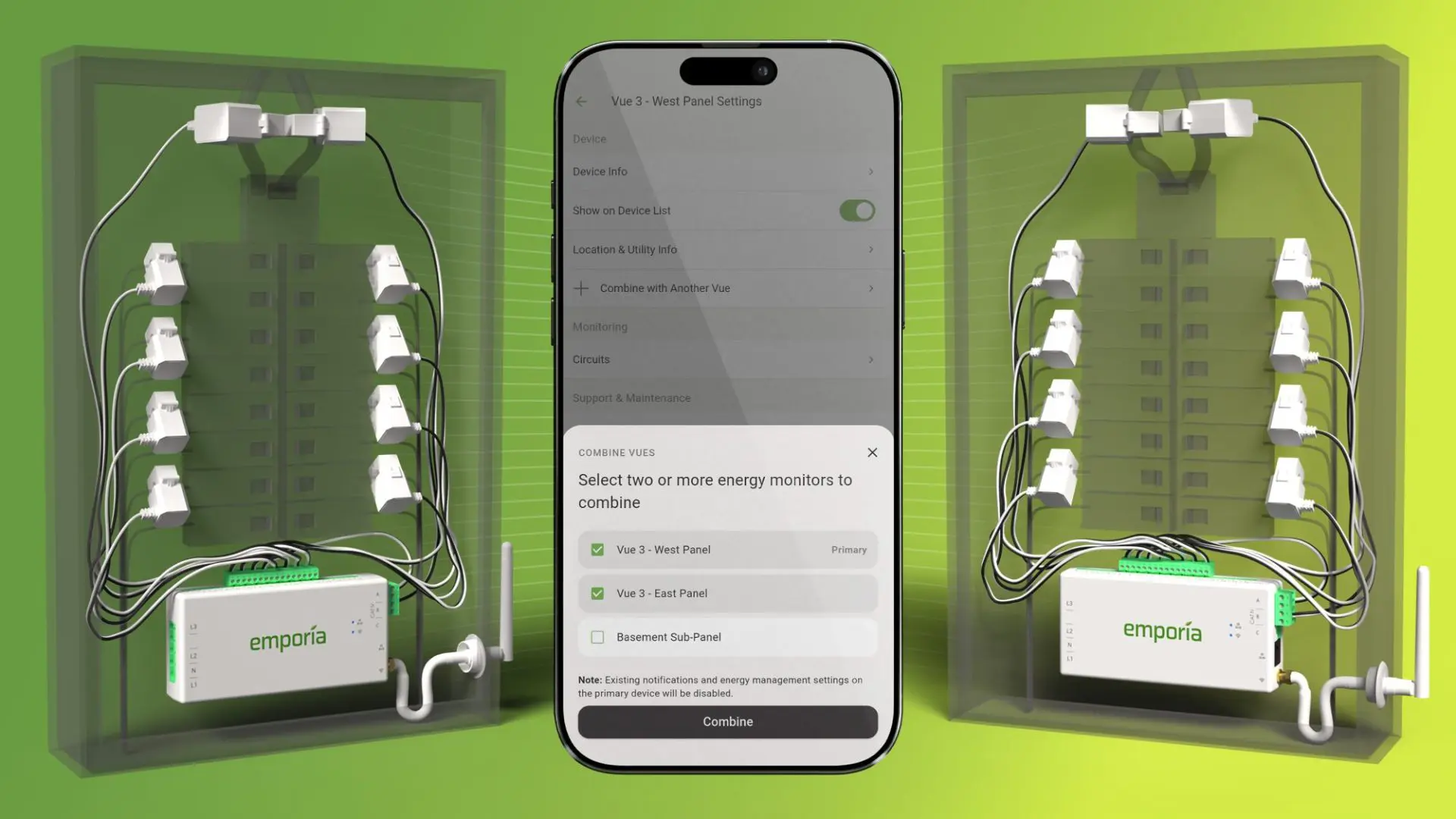
An energy monitor installs directly into your home’s electrical panel, the breaker box where all your home’s electricity flows through. A licensed electrician typically handles the installation, which usually takes a couple of hours. They’ll install the monitoring device as well as sensors (often referred to as CT sensors or CT clamps) on your whole home circuit breaker, as well as the individual breakers for outlets and appliances around your house for some systems.

Measuring Electricity Flow
Once installed, the monitor measures the flow of electricity in real time. It tracks voltage and current, sometimes up to thousands of times per second, to provide highly accurate data about your energy consumption.
Circuit-Level vs. Whole-Home Monitoring
Basic systems track your total home energy use, which is useful but limited. Advanced systems include circuit-level monitoring with individual CT sensors on specific circuits or breakers. This lets you see exactly how much energy each circuit such as your air conditioner, water heater, or kitchen appliances are using individually.
Data at Your Fingertips
The monitor sends all this information to a mobile app or web dashboard. You can check your energy use from anywhere, set up alerts, and track patterns over time. Everything updates in real time, so you always know what’s happening in your home.
What Can You Monitor?
One of the most powerful aspects of energy monitoring is the ability to track both your whole home and individual appliances. Here’s what you can see:
Whole-Home Consumption
Your total electricity use at any given moment. This gives you the big picture and the ability to answer questions like: Are you using 2 kilowatts right now or 8? How does today compare to yesterday or last month?
Individual Circuits and Appliances
With circuit-level sensors, you can monitor specific areas:
- Heating and cooling systems (often the biggest energy user homes)
- Water heaters (constantly using energy to keep water hot)
- Kitchen appliances (ovens, refrigerators, dishwashers)
- Laundry equipment (washers and dryers)
- Electric vehicle chargers
- Pool pumps and hot tubs
- Home office equipment
- Lighting circuits
- Other outlets
Solar Production
If you have solar panels, energy monitoring devices and software can show you how much power you’re generating in real time. You can see when you’re producing more than you’re using (sending power back to the grid) or when you’re drawing from the grid to supplement your solar.
Common Energy Culprits
Energy monitoring often reveals surprising truths. Many homeowners discover that:
- Their HVAC system runs far more than expected
- The water heater uses significant energy overnight
- “Phantom loads” from devices in standby mode add up quickly
- A second refrigerator in the garage is costing them hundreds annually
- Their pool pump schedule is running during hours when utility prices are highest
Why Home Energy Monitoring Matters
Save Money Every Month
Knowledge is power, and in this case, it’s also savings. When you can see which devices are costing you the most, you can make smarter decisions about when and how to use them.
The average American household spends hundreds or even thousands of dollars annually on electricity, and that number keeps rising. When every kilowatt-hour costs more, understanding where your energy goes isn’t just helpful, it’s essential for protecting your budget.
Take Control During Peak Pricing
Many utilities charge three to four times more for electricity during specific peak hours (often 4pm-9pm). With energy monitoring, you can see these cost differences in real time and shift energy-intensive tasks to off-peak times when electricity is cheaper, dramatically reducing your costs.
Reduce Your Environmental Impact
About 60% of utility-scale electricity generation comes from nonrenewable sources like fossil fuels. These non-renewable sources are most prevalent during peak hours when energy consumption is high and renewable production is low.
By monitoring your energy use, you can:
- Reduce consumption during peak hours when fossil fuels dominate the grid
- Time your energy use to align with cleaner energy sources
- Lower your carbon footprint simply by being more aware
- Contribute to a more sustainable energy future
Efficient energy use reduces the demand for natural resources and minimizes environmental impact. Every kilowatt you save helps reduce carbon emissions and protects our planet.
Find Problems Before They Become Expensive
Energy monitoring can alert you to issues you’d never notice otherwise:
- A refrigerator that’s working overtime (and potentially about to fail)
- A sump pump that’s running constantly (indicating a flood risk)
- An oven or space heater that’s been left on
- A heating or cooling system that’s running inefficiently
- Unusual spikes that might indicate electrical problems
These small problems add up quickly on your energy bill, and catching them early can prevent costly repairs or replacements.
Peace of Mind and Control
There’s something reassuring about knowing exactly what’s happening in your home, especially when you’re away. Energy monitoring systems often also give you:
- Real-time alerts when something unusual happens
- Visibility into your home’s status from anywhere
- Understanding of how your family’s habits affect energy costs
- Confidence that everything is running as it should
Share access with family members so everyone can learn about the cost of their energy usage. Set up notifications to remind you if the oven stays on too long. Check your home’s energy use while you’re on vacation to ensure everything is normal.
Beyond Monitoring: Home Energy Management
Here’s where energy monitoring gets really powerful: the best systems don’t just show you data, they help you act on it.
Advanced home energy monitoring solutions integrate with smart home devices to automatically optimize your energy use. Instead of manually adjusting thermostats or remembering to charge your EV during off-peak hours, an integrated system handles it for you.
When connected to smart plugs, EV chargers, thermostats, and other devices, you can:
- Automatically shift energy use to off-peak times when electricity is cheaper
- Manage peak demand thresholds to avoid costly utility charges
- Prioritize the use of solar power when available
- Adjust charging rates to prevent overloading your electrical panel
This means you’re saving money continuously, without having to think about it. Your monitor becomes the data feed of a smart home energy management system that works in the background to measure your usage and share that data with connected devices.
What Makes a Great Home Energy Monitor?
Not all energy monitors are created equal. When evaluating options, look for:
- Real-time data: See what’s happening right now, not last month
- Circuit-level monitoring: Track specific rooms and appliances, not just your whole home
- High accuracy: Precise measurements you can trust for making decisions
- Mobile access: Check your usage from anywhere with an intuitive app
- Smart home integration: Connect with other devices for automated energy management
- Easy-to-understand insights: Complex data presented in simple, actionable ways
- Safety certifications: UL-certified products that meet rigorous electrical safety standards
- Reliable customer support: Help when you need it, from real people who care
Getting Started with Energy Monitoring
Ready to take control of your home’s energy use? Here’s what to expect:
Choose Your System
Research energy monitors that fit your needs. Consider whether you want basic whole-home monitoring or more detailed circuit-level tracking. Look for systems that can grow with you – some allow you to add more sensors over time.
Installation
A licensed electrician is usually the right choice to install an energy monitor in your electrical panel. Installation typically takes a couple of hours, depending on whether you’re adding circuit-level sensors. These systems are compatible with nearly all standard electrical panels.
Setup and Configuration
Once installed, you’ll download a companion app, connect to your monitor, and start seeing data immediately. Some systems let you label circuits, set up your utility rate plan, and configure notifications right away.
See Results Quickly
You’ll start seeing insights within minutes to hours, and many homeowners discover their biggest energy wasters within the first few days. Within your first month, you’ll have enough data to identify patterns and opportunities for serious savings.
The investment in energy monitoring typically pays for itself through energy savings within the first year and continues saving you money month after month after that.
Be in Charge of Your Home Energy
Home energy monitoring isn’t just about watching numbers on a screen. It’s about taking control of your energy future. With the right system, you can save money every month, reduce your environmental impact, and gain peace of mind knowing exactly what’s happening in your home.
Understanding and managing your home’s energy usage should be simple. That’s why solutions like the Emporia Vue Home Energy Monitor exist to make comprehensive energy monitoring accessible and affordable for everyone. The Vue installs directly into your electrical panel, provides real-time insights through an intuitive app, and integrates with other Emporia smart devices (like our EV chargers) to enable automated energy management.
Whether you’re looking to trim your monthly bills, reduce your carbon footprint, or simply understand where your energy dollars go, home energy monitoring is the first step toward a smarter, more efficient home.